By NANETTE LoBIONDO GALLOWAY
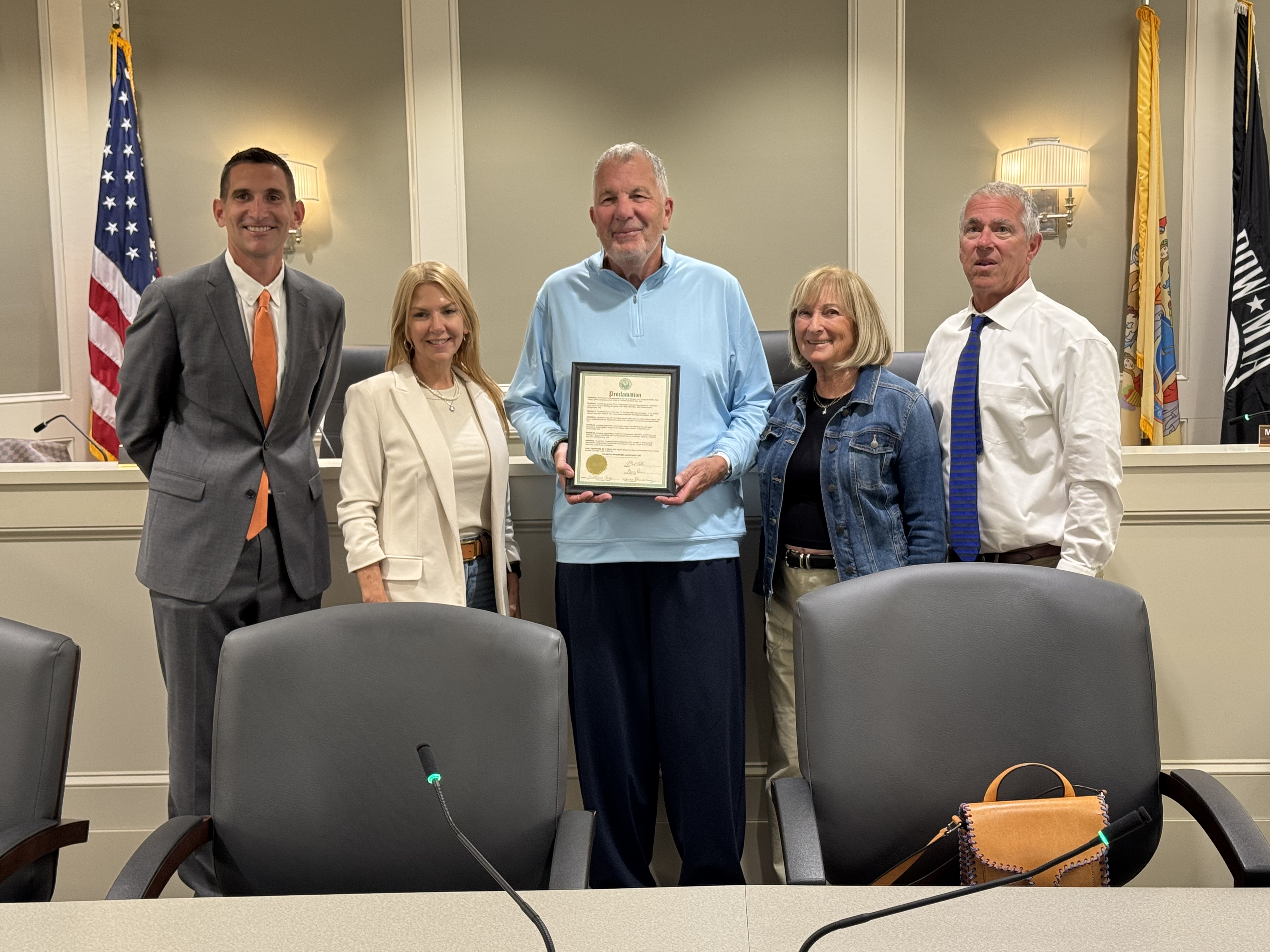
MARGATE – The Board of Commissioners Thursday commemorated Tourette Syndrome Awareness Month by honoring a Pennsylvania teen with ties to Margate.

Proud grandparents Neil and Karen Model of Margate approached the city to recognize the neurological disorder which begins in childhood and is characterized by tics, repetitive movements and sounds that cannot be easily controlled. Their grandson, Ryder Pollack, a high school senior who lives in Pennsylvania, has Tourette Syndrome and advocates for a awareness about the disorder among his peers.
“He is a Tourette Syndrome Ambassador,” Karen Model said. “He goes to schools and Rotary Clubs to talk about Tourette and educate people about acceptance.”
Mayor Michael Collins prepared a proclamation naming June 4 as Tourette Syndrome Awareness Day in Margate.
Tourette Syndrome Awareness Month is commemorated between May 15 and June 15 each year to create awareness of the syndrome and encourage people to be accepting of individuals with the condition, which can be especially hard on teens.
Motor and vocal tics include eye blinking, facial grimacing, shoulder shrugging and uncontrollable movements. Also throat clearing, sniffing, grunting, coughing and repeating words and phrases can present in childhood and get more pronounced during teen years. The ticks present during periods of stress, excitement or fatigue. Anyone can be affected and it is not brought on by medication, ethnicity or socioeconomic status.
“They don’t know what causes it, but I think it might be genetic,” Karen Model said. “I have another nephew who has it.”
She said Ryder has embraced his condition and works as an ambassador to educate others and foster acceptance among his peers. Individuals, especially teens, can face social challenges that create a stigma that can impact their lives, including at school and in employment. Sometimes peer pressure can cause the tics to get worse over time.
Treatment can include behavioral therapy, medications to reduce the severity, and special school accommodations. But the outlook is positive. Some people can learn how to control their tics and reduce the severity. Sometimes teens are also diagnosed with other conditions, such as attention deficit hyperactivity disorder, obsessive-compulsive disorder, anxiety and learning difficulties.
Nevertheless, Ryder, a 17-year-old senior, has accepted the challenge, encourages inclusion and is advocating for himself and others with the disorder.
A member of the National Junior Honor Society, Ryder is currently on college tours to select the location where he will pursue higher education.
He has visited Penn State, Virginia Tech and James Madison universities, but his preference is University of Wisconsin, Karen Model said.
“He’s very bright.”
Ryder will seek a degree in speech therapy, his grandmother said with a smile.
Copyright N.Lo Communication, LLC 2026
Leave a Reply